Using geometric patterns in Ramadan and Eid designs
4 min read · Updated
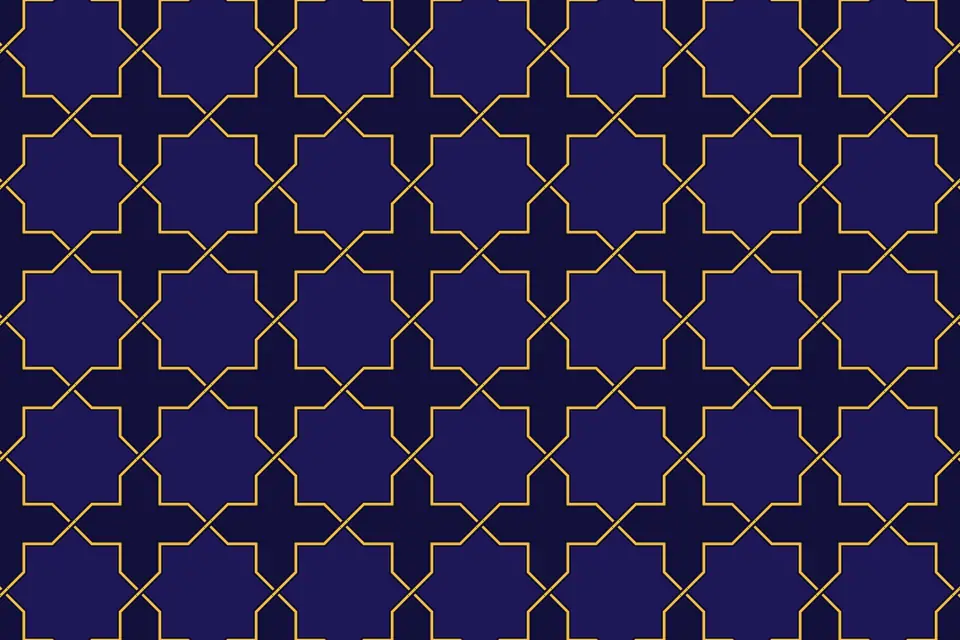
Geometric patterns suit Ramadan and Eid well: they belong to a long tradition in Islamic art, they contain no figurative images, and they work as quietly as a background or as boldly as the whole design. These tips will help you get clean, readable results.
Pick a palette for the moment
- Ramadan: deep indigo, ink blue and emerald with gold lines feel calm and suit the evening hours of iftar and suhoor. Try the Ramadan Night, Gold & Ink and Emerald palettes.
- Eid: lighter grounds feel festive: ivory, sand, blush and turquoise. Try Rose, Turquoise Tile, Desert Sand and Andalus.
- Brand colours: replace the background and line colours with your own, keep one or two fills, and switch the others to “no fill”.
Keep text readable
- Use the card layout to place a framed, plain panel in the middle of the design.
- Or simplify the pattern: set the density to Light, increase the tile size and reduce the line width.
- Put the text where the pattern is calmest, and add a soft shadow or a semi-transparent box behind it in your design app.
- For Arabic and Urdu greetings, give the lettering plenty of room. Nastaliq in particular needs generous line spacing.
Export the right size
- Instagram and Facebook stories, WhatsApp status: 1080 × 1920.
- Feed posts and square cards: 1080 × 1080.
- Slides, TV screens and video backgrounds: 1920 × 1080.
- Print: 3000 × 3000 prints about 25 cm (10 in) wide at 300 dpi; for anything larger, export SVG, which stays sharp at any size.
- Web: the CSS background snippet repeats one small tile and adds almost nothing to page weight.
Treat sacred text with respect
Moajazah draws geometry only and never adds verses, the names of God or other sacred text. If you add Quranic text to your own design, many people prefer not to place it on items likely to be thrown away or put on the floor, such as wrapping paper, napkins or doormats. When in doubt, a greeting such as “Ramadan Kareem” or “Eid Mubarak” is a safe choice for everyday items.
Share the pattern, not just the picture
Every pattern has its own link. Copy it from the editor to reopen the exact design later, to make matching pieces, or to send it to a friend or a printer. Patterns are free for personal and commercial use; a credit is appreciated but never required.
Sources
- The Metropolitan Museum of Art, “Geometric Patterns in Islamic Art”, Heilbrunn Timeline of Art History (2001). metmuseum.org/toah/hd/geom/hd_geom.htm
- Eric Broug, Islamic Geometric Patterns. London: Thames & Hudson, 2008.